Author: Gordon Laws
-
Guilford Ricks: The Widower who Left His Children Orphaned
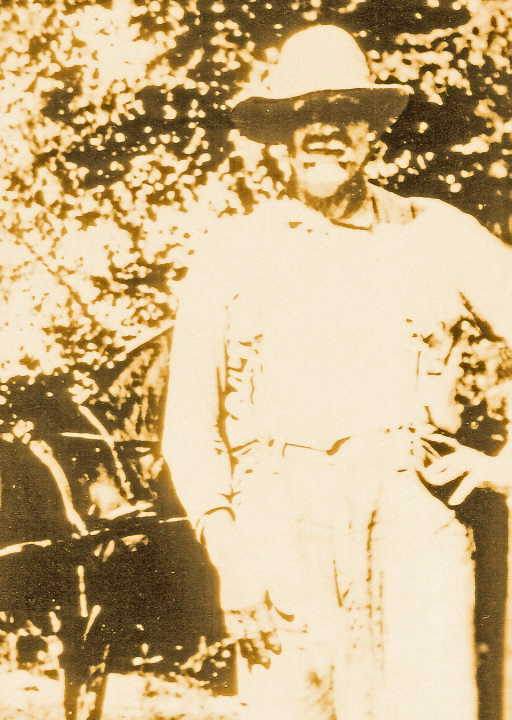
Private Guilford Ricks was not your average enlisted Confederate. Contrary to media depictions, the Civil War was mostly a young man’s war—the average age of Confederates killed at Gettysburg was about 23. The average casualty was of modest means, owned no slaves, was unmarried, and had no kids. He was generally about 5’6″ to 5’8″,…
-
Reverend Henry Louis Baugher: The Force Behind Christ’s Church (Lutheran)

That teacher that won’t cancel classes during a blizzard or a major national event, that ensures you always get the homework assignment . . . that was Henry Louis Baugher. If Christ’s Church (Lutheran) was the physical object that brought Gettysburg College, the Lutheran Theological Seminary, and religious worship together, the force behind them was…
-
The Role of Christ’s Church Before, During, and After the Battle of Gettysburg

When considering its history with the Battle of Gettysburg, Christ’s Church (now known as Christ Evangelical Lutheran Church) is best remembered for the killing of clergyman Horatio Stockton Howell (more on that below) and the sheltering of Ole Liz Butler, a black washerwoman who escaped Confederate cavalry and hid until the battle concluded. The Church…
-
Life and Death on the Farm of John and Elizabeth Wible

The lives of Reverend John Wible and his wife, Elizabeth Wible (Stallsmith), appear to have passed without generating a lot of notice. The reverend worked at the Christ’s Lutheran Church (which played a prominent role in the battle). Elizabeth was from a long-running family in the area. They had no children. They turn up in…
-
The Interactive Gettysburg Map
This interactive Gettysburg map marks the beginning of a larger project to chart the civilian landscape of Gettysburg in new ways. What you see here is Layer One, focused on Confederate burials drawn from Greg Coco’s Gettysburg’s Confederate Burials and similar sources like Find-a-Grave. Each marker represents a farm or landmark where burials were recorded…
-
Confederate Burials on the John Crawford Farm

The John Crawford farm, tenanted in part by Basil Biggs, ended up with a large number of Confederate burials because of its location directly behind the southern battle lines on July 2–3, 1863. When Longstreet’s assault surged through the Peach Orchard, Wheatfield, and toward Cemetery Ridge, thousands of Confederate casualties fell in that sector.
-
Madness in Gettysburg: Ephraim Albert Shot His Wife, Not a Dog
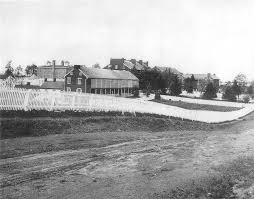
The name Ephraim comes from the Bible and means “fruitful” or “doubly fruitful.” By all appearances, Ephraim Albert appeared to fit the definition. He was a farmer who was the son of a farmer—the youngest of at least three, possibly more, kids in fact. And Ephraim was similarly fruitful. In the 1870 Census, he’s shown…
-
John Crawford: Lawyer and Gentleman Farmer

As with much of the Underground Railroad, very little can tell us whether John Crawford knew what Basil Biggs was up to when he lived on as a tenant farmer on Crawford’s land. Biggs and family moved to the area from Maryland in 1858, seeking to be in a non-slave-holding state and looking for educational…
-
Brother v. Brother: William Weikert, Adultery, and Dogfighting
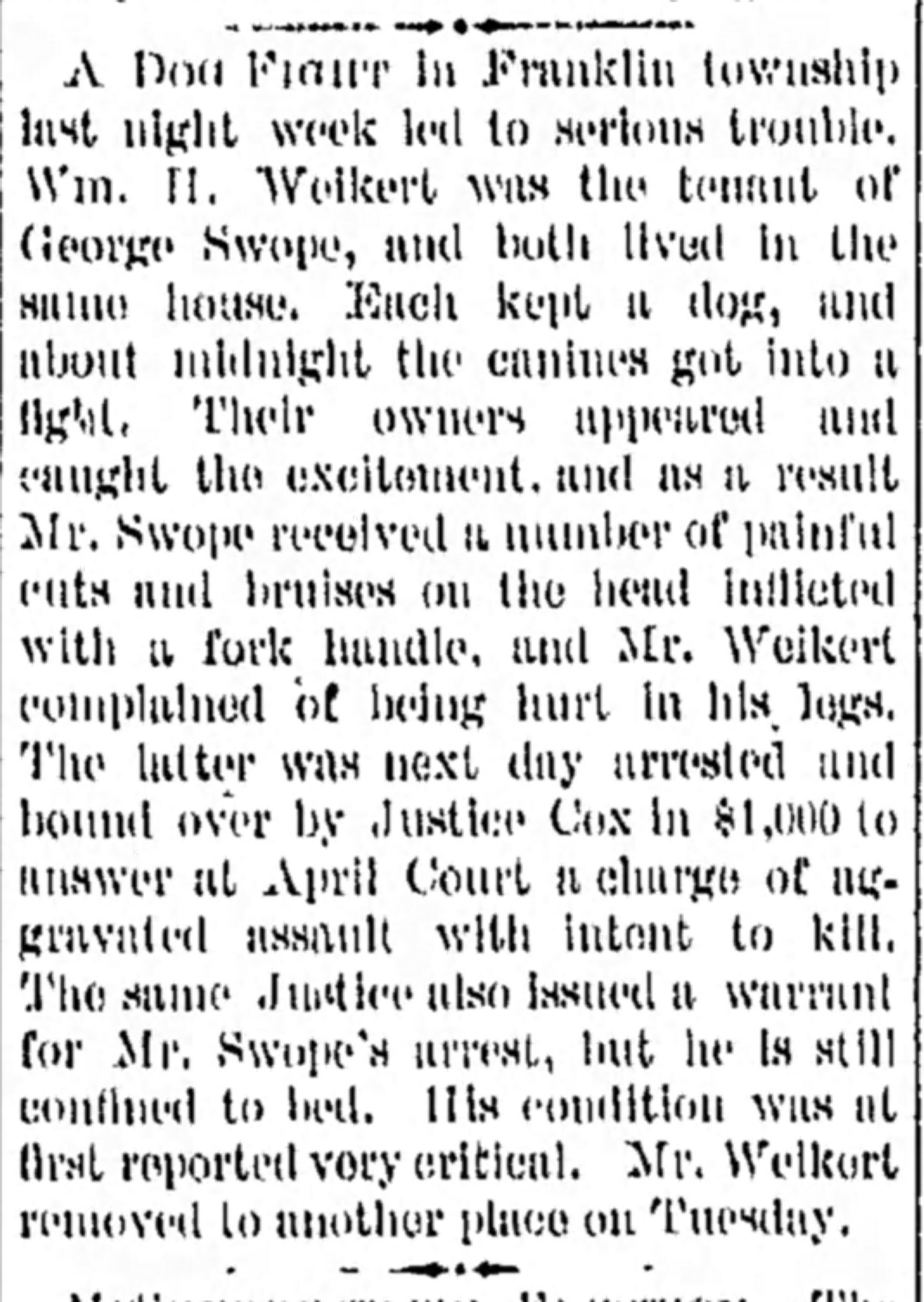
The person easiest to track in this story is William Henry Weikert, son of John George Weikert. Mercifully, nearby Weikerts in the same generation did not have a son named William Henry. When talking about men named George Weikert in Civil War Gettysburg, we have to get precise. It doesn’t help to go to middle…
-
Charles Hoffman Found Out: Don’t Mess with David Middlecoff
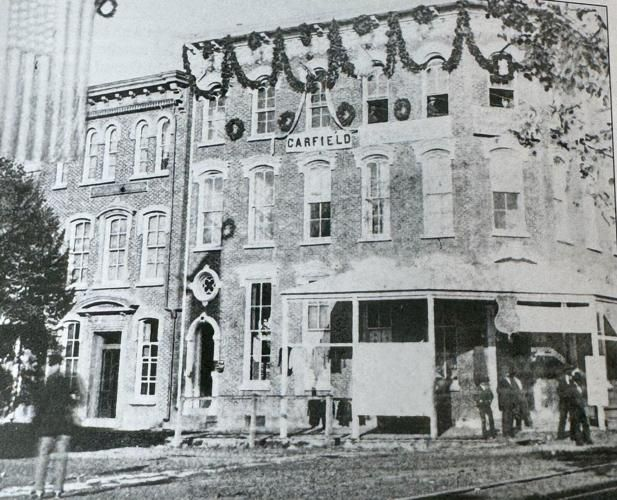
When Charles W. Hoffman wound up in legal and debt disputes with the Fahnestocks and David Middlecoff, he was battling some of the most powerful men in the region. David Middlecoff, in particular, was a nationally recognized politician, businessman, army and militia leader, and lender. Once the relationship turned sour, Charles Hoffman wasn’t going to…