Tag: Battle of Gettysburg
-
New Residents and New Interactive Map Features

If you are of European descent and your family has been in the United States for several generations, chances are pretty good that you’re related to a resident of Adams County, Pennsylvania, from the 1860s. (If you’re of African American descent, you might have unexpected connections as well.) Sure, you might be ninth cousins, but…
-
Dr. Charles Horner: Gettysburg’s Quiet Surgeon and the Question of John Burns

Wander around Gettysburg and ask folks about Dr. Charles Horner. Very few, if any, will have heard of him. If you spend enough time in Gettysburg, you start to notice a pattern. The soldiers have monuments. The generals have statues. Even civilians like John Burns get mythologized into something almost larger than life.
-
The Long Journey Home of John Burns

You won’t get through Gettysburg without hearing the legend of John Burns. And legend it surely is: Burns became nationally famous, wrote a pamphlet about his experience, traveled some to support it, and told fabulous tales of being wounded anywhere between three and seven times. His grave includes an American flag—one of two civilian plots…
-
Alexander Schimmelfennig, the Garlachs, and a Backyard Refuge

The story of General Alexander Schimmelfennig is one of the oddities of the Battle of Gettysburg. On the evening of July 1, 1863, after the first day’s fighting rolled up the Union line north of town, the Union general slipped into the tight maze of alleys and back lots along Baltimore Street—now behind Confederate lines—and…
-
Lt. Colonel David Winn: A Doctor, A Letter Writer, and the Man with the Gold Teeth

One of the odd post-battle stories involves the return of David Winn’s body from Blocher’s Knoll. The officer’s body made it home . . . without his gold dental work, which had been retained by the Blocher family. The incident made headlines and inflamed feelings in the South. Often lost in the story is this:…
-
The Forgotten Heroes: Horses of Gettysburg
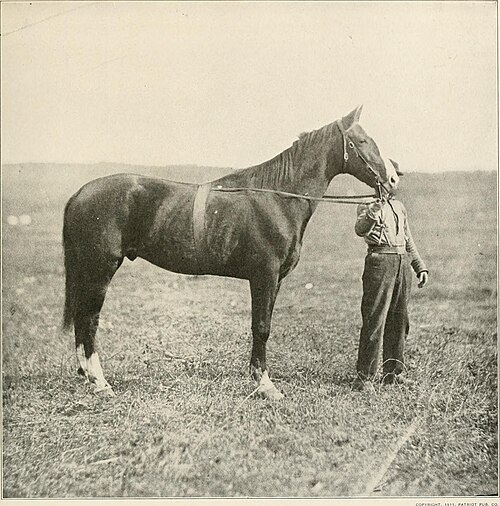
The horses of Gettysburg are their own tragedy. When the armies untangled from each other at Gettysburg on July 4, they left not only more than 6000 dead men, they also left between 3000 and 5000 dead animals. Horses and mules were integral to both armies, though their roles are generally only lightly touched upon…
-
Gettysburg’s William Maurey: Killed as a Confederate

What causes a man like William Maurey, born and raised in Gettysburg, to take up arms against his neighbors and, in many cases, his family? Each case is different, and so the answer is likely different for each person. Certainly, we’ve explored this in the case of Wesley Culp. As it would happen, the case…
-
Truth or Legend? Feral Hogs at Gettysburg

On the night of July 2, 1863, the battlefield around Gettysburg fell into an eerie darkness punctuated by the groans of thousands of wounded men. Earlier that day, vicious fighting had swept through farmer George Rose’s wheatfield – a 20-acre expanse that changed hands multiple times in a bloody back-and-forth. More 6,000 soldiers were killed…
-
Preserving Black History at The Jack Hopkins House

The Adams County Historical Society and the managers of Lincoln Cemetery announced in October 2025 that they would restore the Jack Hopkins House and turn it into a black history museum. Why did prominent historians in town choose the Jack Hopkins house? As various articles explain, the house itself is possibly the last edifice in…
-
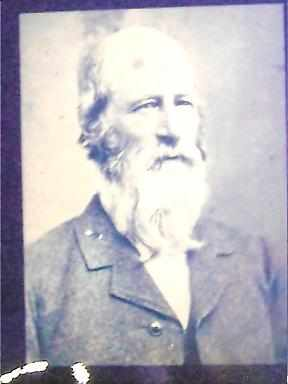
Truth and Legend on the John Forney Farm
The Legend of John Forney, his wanderings, his farm, and the role of his property in the Battle of Gettysburg was forged during his own lifetime. Forney’s property today is home to the Eternal Light Peace Memorial, and tales of the disaster of Iverson’s Brigade on his land are told on most tours. Further, ghost…