-
The Forgotten: The Dead of the 8th Alabama Infantry at Gettysburg

With this article on the 8th Alabama Infantry and subsequent list of men, I’m starting a periodic feature on men whose combat deaths caused them to disappear and effectively be forgotten. The average age of a soldier killed at Gettysburg was roughly 22 to 23. He was typically not married and had no children. As…
-
Exploring the Legacy of Emanuel Craig and Gettysburg’s Black Community

Emanuel Craig was an African American laborer, Civil War veteran, and family man in 19th-century Gettysburg, Pennsylvania. His life spanned the tumultuous Civil War era and Reconstruction, and his story illuminates the experiences of Gettysburg’s Black community during that period. Born around 1829 to Benjamin Craig and Mary (Wagner) Craig, Emanuel grew up in Adams…
-
Lydia Leister and Her Farm in War and Memory
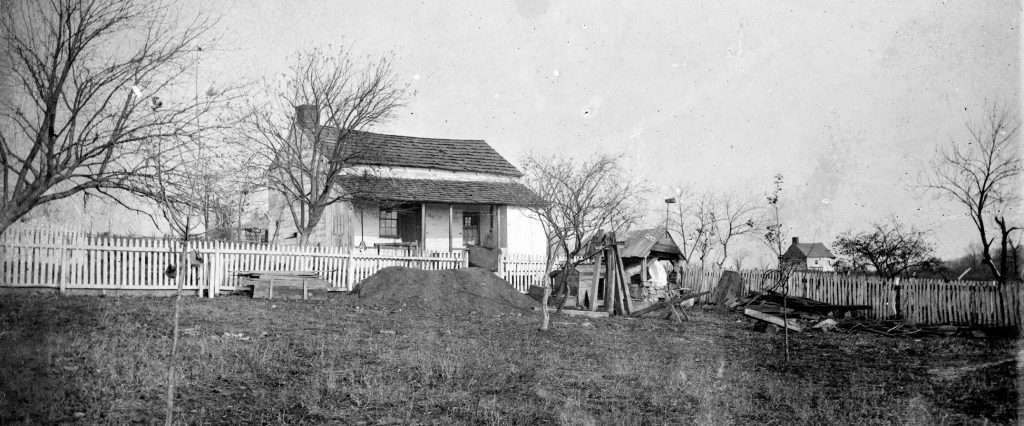
Lydia Leister (born Lydia Study) was born some time between 1808 and 1811 (depending on what source you read) in Carroll County, Maryland. She hailed from a large family: her father, Dr. John Martin Study, was a local physician, and one of her sisters, Catherine, later married Gettysburg farmer John Slyder. In 1830 Lydia wed…
-
The Forgotten Heroes: Horses of Gettysburg
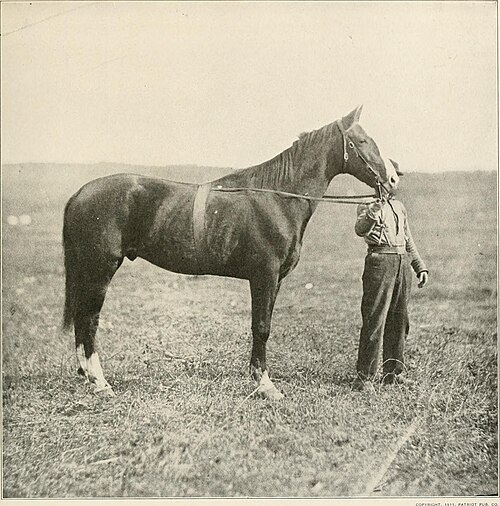
The horses of Gettysburg are their own tragedy. When the armies untangled from each other at Gettysburg on July 4, they left not only more than 6000 dead men, they also left between 3000 and 5000 dead animals. Horses and mules were integral to both armies, though their roles are generally only lightly touched upon…
-
Gettysburg’s William Maurey: Killed as a Confederate

What causes a man like William Maurey, born and raised in Gettysburg, to take up arms against his neighbors and, in many cases, his family? Each case is different, and so the answer is likely different for each person. Certainly, we’ve explored this in the case of Wesley Culp. As it would happen, the case…
-
Christmas in Gettysburg in 1863: Anxiety and Hope

Christmas in Gettysburg in 1863 was a study in extreme contrasts. The small town was still emerging from the shadow of the cataclysmic battle fought there five months earlier. The Battle of Gettysburg (July 1–3, 1863) had left the community physically and emotionally scarred. By Christmastime, most of the immediate horrors had been addressed –…
-
Truth or Legend? Feral Hogs at Gettysburg

On the night of July 2, 1863, the battlefield around Gettysburg fell into an eerie darkness punctuated by the groans of thousands of wounded men. Earlier that day, vicious fighting had swept through farmer George Rose’s wheatfield – a 20-acre expanse that changed hands multiple times in a bloody back-and-forth. More 6,000 soldiers were killed…
-
Preserving Black History at The Jack Hopkins House

The Adams County Historical Society and the managers of Lincoln Cemetery announced in October 2025 that they would restore the Jack Hopkins House and turn it into a black history museum. Why did prominent historians in town choose the Jack Hopkins house? As various articles explain, the house itself is possibly the last edifice in…
-
Truth and Legend on the John Forney Farm
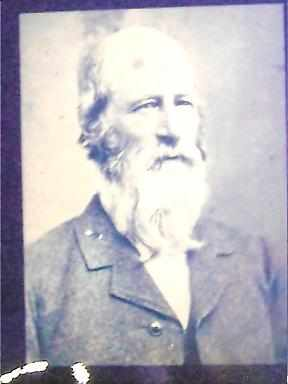
The Legend of John Forney, his wanderings, his farm, and the role of his property in the Battle of Gettysburg was forged during his own lifetime. Forney’s property today is home to the Eternal Light Peace Memorial, and tales of the disaster of Iverson’s Brigade on his land are told on most tours. Further, ghost…
-
The Dobbin House, the Underground Railroad, and a History of Hauntings

I was once having dinner with a work colleague at the Dobbin House. It was a quiet late winter day, and we had been doing work on a phone app. The fine dining was slower than usual, and several tables sat empty around us. A table just across from us had two married couples—clearly tourists,…