Tag: Gettysburg farms
-
Confederate Burials on the Francis Bream Farm
One of the larger concentrations of Confederate burials was found on the Francis Bream farm because of its unique location and the role it played during and after the fighting on July 2, 1863. Its volume of burials was similar to that of the John Edward Plank farm though fewer than the number found on…
-
Revealing John Wolford: His Legacy and Connection to Caroline Shenabrook

Previously, we looked at the case of Isadore Keefer, Caroline Shenabrook, and John Wolford. You may recall that Shenabrook had a child out of wedlock with Isadore Keefer—a girl named Annie that we’ll cover in a subsequent article. However, census and death records show she also had three other children out of wedlock with a…
-
Discover the Trostle Farm: A Civil War Survivor’s Story

Near the farms of the Roses, Michael Bushman, George Bushman, and the Slyders sits the Trostle farm. The Trostle farm is a favorite among tour guides—tourists can pause in the street running past the barn and be directed to find the famous hole in the barn made by a shell on July 2, 1863. The…
-
The Remarkable Life of Henry Benner: Gettysburg Hero
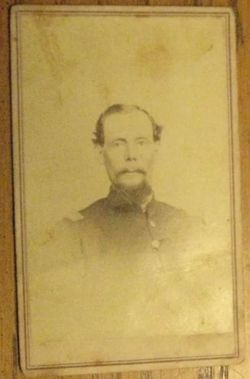
In his time, Henry Benner was one of the best-known Gettysburg residents—a burgess of the town (like a mayor), a war hero with a trove of wild experiences and stories, and a respected business- and family man. Today, the hill bearing his family name is barely visited, and few people know of Henry, his prominent…
-
Discovering the History of Benner’s Hill in Gettysburg
Today, Benner’s Hill does not have the same public resonance as Big Round Top and Little Round Top. Nor does it mix commerce and memory as Cemetery Hill does. And it does not feature in the auto tour like those three and the famous Culp’s Hill. Yet, Benner’s hill played an important role in the…
-
Confederate Burials on the George Rose Farm
John and George Rose estimated that between five hundred and one thousand men were buried on their property. The number may well have been higher—the property saw twenty thousand men engage and create six thousand casualties.
-
The Struggles of John Slyder in Civil War Gettysburg

For John Slyder and his family, the years 1862 and 1863 opened with tragedy and ended in disaster. In 1862 alone, John and Catherine Slyder saw two young grandchildren, ages 2 and 4, die. Further, their daughter-in-law (wife of William), Rebecca Shriver, died two weeks after the birth of her last child. This, of course,…
-
The Big History of Big Round Top and Little Round Top

Prior to the Civil War, the twin hills south of Gettysburg were not known by the familiar names “Big Round Top” and “Little Round Top.” The taller, southern hill (today “Big Round Top”) was generally called “Round Top” or “Round Top Mountain” by locals, and sometimes simply “Round Hill,” reflecting its prominent rounded shape. The…
-
The Story of the George Rose Farm and Its Legacy

Scores of accounts about the Rose farm lead off with something like “at the farm of George Rose . . .” What most don’t realize is that George Rose was not only not living at the farm, he wouldn’t do so until at least 1868. So who was actually there, and how were they affected?…
-
The Cane of John Yarbrough
The following is a piece of fiction inspired by the previous post on the cane of John Yarbrough and the farm of Abraham Plank. (Recall, too, that Abraham Plank is the uncle of John Edward Plank whose farm saw a large number of Confederate burials.) Yarbrough genealogy is very well researched, but details around Private…