Today, Benner’s Hill does not have the same public resonance as Big Round Top and Little Round Top. Nor does it mix commerce and memory as Cemetery Hill does. And it does not feature in the auto tour like those three and the famous Culp’s Hill. Yet, Benner’s hill played an important role in the battle; it was owned by a prominent Gettysburg family; and today, it is part of the national military park, though very few people visit it.
Prewar Ownership and Land Use
Benner’s Hill is named for the Benner family, who owned and farmed the land before and during the Civil War. At the time of the Gettysburg battle (July 1863), the hill was part of a 208-acre farm belonging to Christian Benner and his wife Susan. Christian Benner (1804–1879) was a local farmer (his homestead lay about 400 yards south of the hill’s crest, near the base of Wolf’s Hill). The Benner farm was typical of Adams County agriculture – much of the hill’s summit was open cropland, planted in wheat and corn in the summer of 1863. Lower slopes and nearby areas included pasture and woodlots; an orchard grew west of the Benner house, and timber stood thicker on Wolf’s Hill just beyond the farm.
One notable member of the family was Jacob Benner (1807–1889), Christian’s brother. Jacob Benner was an attorney (for example, he represented the estate of Peter Weikert) and prominent landowner in the Gettysburg area who had acquired and sold other farms before the war. (He purchased what became the Rose Farm in 1844 and sold it in 1858.) Although Jacob did not reside on Benner’s Hill during the battle, the Benner name was well-known locally. The hill and farm retained the family name, reflecting the Benner family’s long prewar tenure on that land. In summary, Benner’s Hill was a working farm on the eve of battle – its crest cleared for fields of grain, with fences, a stone wall, and patches of brush around its edges, and the Benner family dwelling and barn situated to the south on the farm.
Role in the Battle of Gettysburg
Benner’s Hill played a consequential role on July 1–2, 1863, primarily as a Confederate observation and artillery position on the far left of General Ewell’s Corps. On the late afternoon of July 1, as fighting died down elsewhere, Confederate scouts from the 35th Virginia Battalion (White’s cavalry) rode along the Hanover Road over Benner’s Hill and spotted unexpected Union forces to the east. This report – Union cavalry appearing on his flank – caught Lt. Gen. Richard Ewell’s attention just as he was considering an assault on Cemetery Hill. The Union detachment (elements of Union cavalry under Gen. D. McMurtrie Gregg) soon withdrew, but the sudden appearance of Federal troops east of Benner’s Hill delayed Ewell’s planned evening attack on Cemetery Hill. One Union general later called this episode “a timely diversion,” as it helped stall Ewell’s assault on July 1. In this way, Benner’s Hill (or at least the threat it posed) influenced the first day’s action by buying the Union precious time.
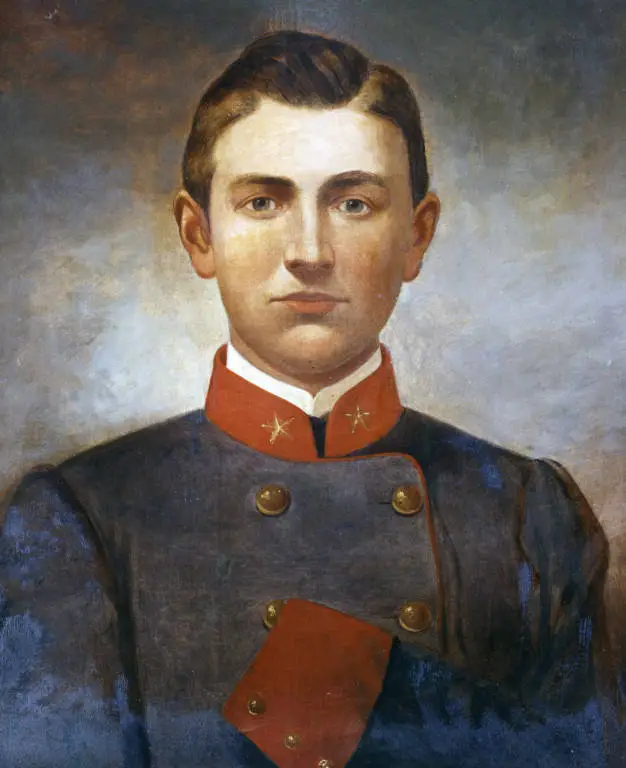
On July 2, Benner’s Hill assumed its most significant role. Major Joseph W. Latimer, a 19-year-old artillery prodigy known as the “Boy Major,” selected Benner’s Hill as the only suitable artillery platform on Ewell’s front from which to bombard the Union right. In the late afternoon (around 4:00 p.m.), Latimer massed a battalion of Confederate artillery on the hill’s crest to support the impending infantry attack on Culp’s and East Cemetery Hills. Five batteries totaling roughly 16–20 guns were brought up under Latimer’s command – including units such as Brown’s Chesapeake (Maryland) Artillery, Carpenter’s Alleghany (Virginia) Artillery, Dement’s 1st Maryland Battery, the Lee (Virginia) Battery, and even the Rockbridge Artillery (borrowed from the reserve). These cannon were densely packed along the narrow ridge (Benner’s Hill is a long, thin ridge running NE-SW, almost perpendicular to the Union lines), which made them a concentrated target. Around 4 p.m., 14–20 Confederate guns opened fire from Benner’s Hill, aiming at the Union positions on Culp’s Hill and East Cemetery Hill across Rock Creek.

For the next hour and a half (about 4:00–5:30 p.m.) on July 2, a fierce artillery duel raged. Latimer’s guns engaged approximately 24–37 Union cannon positioned on East Cemetery Hill, Culp’s Hill, and adjacent high ground (such as Stevens’ Knoll). The exchange was intense: one Union artillerist, Colonel Charles Wainwright, admitted it was “the most accurate fire I have yet seen from their artillery” – a grim compliment to the Confederate gunners’ skill. However, the Southern batteries were both outnumbered and at a disadvantage in elevation; the Union guns held stronger, higher positions and brought superior fire to bear. The result was punishing. Latimer’s battalion suffered heavy damage: caissons exploded, at least one gun was disabled, and casualties mounted. Major Latimer himself was gravely wounded near dusk – struck by a shell fragment that shattered his left arm and killed his horse, pinning him under the animal. With their commander down and ammunition nearly exhausted, the Confederate batteries were ordered to withdraw just as Ewell’s infantry assault was set to begin. By about 6 p.m., the cannons on Benner’s Hill fell silent, and only four operational guns remained on the crest.

No Union infantry attack was ever launched against Benner’s Hill itself. The hill stayed in Confederate hands until the army’s retreat on July 4, but its artillery mission on July 2 ended in failure. Despite their accurate gunnery, Latimer’s batteries could not neutralize the Union positions. The unequal contest inflicted serious losses: for example, Brown’s Chesapeake Artillery on Benner’s Hill lost 4 men killed, 12 wounded, and 9 horses shot. Major Latimer’s wound forced an amputation; he was evacuated with Ewell’s retreat and died of infection a month later in Harrisonburg, Virginia, where he is now buried.. After the battered guns withdrew, three brigades of Confederate infantry (Johnson’s Division) passed over Benner’s Hill at dusk on July 2 to attack Culp’s Hill. Those troops were repulsed in heavy fighting that night. On July 3, Benner’s Hill saw little action – Latimer’s surviving batteries stayed in reserve and did not reengage. Thus, the hill’s combat role was essentially confined to July 2, 1863, when it served as Ewell’s ill-fated artillery platform on Gettysburg’s east flank.
Postwar Land History and Commemoration
After the battle, the Benner family farm was left devastated – crops were trampled, fences destroyed, livestock gone – but the Benners resumed civilian life amid the wreckage. Christian Benner survived the war (he died in 1879) and his wife Susan lived until 1892. For some years after 1863, the property remained in the Benner family’s hands and continued to be farmed. In 1881, however, the Benners sold the farm. By the time of the 25th anniversary of the battle (1888), the “old Christian Benner house” was owned and occupied by E. L. Houch (Houck), a former Union Army lieutenant. Houch welcomed returning veterans to visit – one Confederate veteran, Charles Rollins, wrote of sleeping in the Benner farmhouse on July 4, 1888, noting that the stone house still bore “ugly scars” of the battle. Rollins also visited Susan Benner (then 81 and in failing health) to hear her reminiscences of the battle. The farmhouse remained a tangible relic for decades, a place where the war’s participants and local family members could recall the events of 1863.
In the ensuing decades, Gettysburg Battlefield preservation gradually reached Benner’s Hill. The federal Gettysburg National Military Park was established in 1895, and the War Department began marking and acquiring important ground. Benner’s Hill was not on the Union lines, so it had no large regimental monuments, but it was recognized for its significance to the battle’s second day. By the early 1900s, the government had obtained at least the summit of Benner’s Hill and marked the Confederate artillery position. In 1905, eight replica cannon carriages were placed on Benner’s Hill to represent Latimer’s battalion, illustrating where the Confederate guns had stood. The War Department also installed official cast-iron tablets to interpret the action. Today, several bronze narrative tablets still dot Benner’s Hill, each describing the role and losses of a specific Confederate battery (for example, the marker for Brown’s Chesapeake Artillery recounts its two-hour duel and withdrawal when one gun was disabled and ammunition low). A headquarters marker for Latimer’s Artillery Battalion was also erected, summarizing the battalion’s service. These modest markers, along with the mounted cannon, serve as the principal “monuments” on Benner’s Hill – in contrast to Gettysburg’s grand regimental memorials, they quietly indicate an often overlooked position.
Benner’s Hill became part of Gettysburg National Military Park and is preserved as open ground. The National Park Service (NPS) later added modern interpretation as well. A wayside interpretive sign at the hill explains the significance of “Latimer’s Battalion” and the artillery engagement for today’s visitors. Unlike the busier areas of the battlefield, Benner’s Hill has no towering monuments or memorial avenues named after famous generals – its commemoration is more subdued, focused on preserving the landscape and telling the story through markers and exhibits. The hill’s inclusion in the park ensures that the site of Latimer’s doomed artillery duel and the Benner family’s travails is not forgotten. In recent years, preservationists have expanded protected lands in this sector: in 2022, for instance, the Gettysburg Battlefield Preservation Association purchased a 50-acre tract on nearby Wolf’s Hill (across from the Daniel Lady Farm) to eventually add to the park, helping buffer and restore the Benner’s Hill area to its 1863 appearance.
Civilian and Family Connections
The story of Benner’s Hill is not only military but also personal – it unfolded literally in the Benner family’s backyard, entangling local civilians in the chaos of war. Christian and Susan Benner and their children experienced the battle firsthand. Nineteen-year-old Oliver F. Benner, son of Christian, later recounted vivid memories of July 2, 1863 from the family farm. That morning, Oliver’s father went to check their wheat field on the hillside (today’s Benner’s Hill) only to stumble into Confederate soldiers hiding behind a stone fence. A Confederate general (possibly Brig. Gen. John M. Jones) had set up an observation post there; he promptly detained Christian Benner, saying the farmer could not return home and must remain behind Confederate lines. Christian was sent under guard to a neighboring farm (his brother Daniel Benner’s house) and would be kept away from his family until that night. Meanwhile, Oliver and his mother Susan stayed at their house as Union and Confederate forces swirled around them. Around midday on July 2, Union skirmishers (likely from the 28th Pennsylvania Infantry) moved through the Benner farm and briefly questioned the family for information on the Confederates. Soon after, Confederate foragers arrived in the Benner kitchen looking for food, which Susan Benner gave them before they moved on.
By late afternoon of July 2, the full fury of battle erupted around the Benner homestead. As Latimer’s 20 guns opened fire from the hill behind the farm, Union infantry skirmish lines fell back across the Benner fields towards Culp’s Hill. Oliver Benner watched from an upstairs window as Union soldiers deployed in their orchard, exchanging fire with advancing Confederates – until a bullet whizzed so close to Oliver’s face that he hastily ducked down. Almost immediately, the Benner house was pressed into service as a makeshift field hospital. When Ewell’s infantry assault on Culp’s Hill began near dusk, wounded Confederates streamed back to the Benner farm. Oliver recalled that they laid injured men “on the floor of the kitchen, up in the barn, and out in the yard” – the first sight of bloodied soldiers was dreadful to the family, but they soon steeled themselves to help as they could. The kitchen floor would remain stained with blood for decades.
Under fire and with wounded in their home, the Benners endured a harrowing evening. Union artillery shells aimed at the hill fell short into the farm: one shell plunged through the Benner kitchen chimney and exploded, scattering bricks and stone over the wounded men on the floor. Miraculously, the incapacitated soldiers barely reacted – “they made no ado whatever,” Oliver noted, even as debris rained down. To protect the site, a Confederate surgeon (a “little major,” per Oliver’s account) asked Susan Benner for material to make a hospital flag. She ripped up a piece of red cloth, which soldiers nailed to the farmhouse roof – a signal to Union gunners that this was a hospital and should be spared. After nightfall, Christian Benner was escorted back home by a Confederate guard, reuniting with his family amidst the groans of wounded in their war-torn house.
Even on July 3, the Benner farm remained behind Confederate lines, effectively a Confederate hospital and encampment. That morning, dozens of wounded remained on the property, and a cluster of Union prisoners under guard lay across the lanecivilwartalk.com. A Confederate quartermaster then arrived with a chilling transaction: he announced to Christian Benner, “I’m going to take the first horse inside your stable,” but to legitimize the seizure he thrust $125 in Confederate currency into the farmer’s hand as paymentcivilwartalk.com. Christian took the money (the worthless grayback bills would become family keepsakes) and watched the soldier lead away their horsecivilwartalk.com. The quartermaster also delivered a warning – Confederate artillery would be re-occupying the knoll of Benner’s Hill, so the Benner family “had better move out” for their own safetycivilwartalk.com. With that, on July 3 the Benners hastily evacuated their home, carrying what few valuables they could, and sheltered at Christian’s brother Daniel’s house nearbycivilwartalk.com.
When the family returned on July 4 after the Confederate retreat, they found a scene of loss and destruction. Their five horses were gone (all either taken by the Confederates or killed), all the meat and poultry in their springhouse had been consumed, much of their flour and provisions stolen, and the fields of wheat, grass, and oats were flattened by troops and wagons. Bureau drawers had been rifled through and contents dumped on the floor. Two Confederate soldiers had died in the Benner barnyard during the night; their bodies lay covered with a blanket until burial details arrived the next day. A neighbor discovered another corpse in the woods on Wolf’s Hill (possibly a Virginia soldier, rumored later to have been Wesley Culp, a Gettysburg native fighting for the South) – Christian and Oliver helped bury this decayed body where it lay in the thicket. Surveying the wreck of his property, Christian Benner was despondent, telling his son that he “felt just like starting off and never looking back.”
In the months and years after Gettysburg, the Benner family and others like them sought compensation for their losses. Pennsylvania established a process for citizens to file damage claims (though most were never fully paid). Jacob Benner, the family’s elder statesman in Gettysburg, filed a claim in 1868 for damages amounting to $551.50 and eventually received $471.50 in compensation. It’s likely that Christian Benner also submitted claims for the severe damage to his farm (records show a claim by a Christian Benner of Straban Township, where the farm was located, in the postwar period). These petitions detailed the confiscated livestock, ruined crops, and destroyed property that Gettysburg area residents suffered. While such reimbursements fell far short of actual losses, they indicate the tangible impact on civilians. Beyond official claims, the Benner family’s story lived on in local lore. Oliver Benner’s recollections (published in Battleground Adventures, 1915) and the memoirs of visiting veterans preserved the human dimension of Benner’s Hill – the frightened family in the crossfire, the mother nursing soldiers, the farm boy narrowly escaping a sniper’s bullet, and even Susan Benner humorously rebuking a Rebel who teased her as she fled the shelled house (“Fun’s fun, but this ain’t no fun!” she retorted). Such anecdotes provide a poignant counterpoint to the military narratives, reminding us that Benner’s Hill was home to a family caught between two armies.
Modern Status and Preservation
Today, Benner’s Hill is a quiet, largely open knoll within Gettysburg National Military Park – “one of the least visited places on the Gettysburg battlefield,” as one guidebook notes. The hill rises to about 574 feet elevation (commanding a lower skyline than Cemetery or Culp’s Hill) and is located just east of Gettysburg off the Hanover Road. It is not a stop on the main auto tour, so visitors must deliberately seek it out. Those who do will find a paved park spur road (Latimer Avenue) leading up to a small loop at the hill’s south end. From there, one can walk along the crest in the footsteps of Latimer’s artillery line. The views are excellent: looking west, one can see the town of Gettysburg and the rise of Cemetery Hill and Culp’s Hill – the same targets that the Confederate gunners aimed for in 1863. The gentle slope of the hill and the tree-dotted bottomland of Rock Creek lie between, much as they did during the battle.
The current condition of Benner’s Hill is one of careful preservation. The NPS maintains the fields by seasonal mowing, keeping the crest open as it was historically (some peripheral areas have grown up in woods, but key sightlines are maintained). The park road and loop provide easy access, and visitors are free to stroll the hill. Several artillery pieces (cannon replicas) are emplaced in a line, representing the Confederate batteries and evoking the battlefield landscape. The interpretive wayside exhibit at the parking loop discusses “Where the Boy Major Fell,” recounting Major Latimer’s story and the artillery duel. In addition, the historic War Department cast-iron markers remain on site: these include the Latimer’s Battalion tablet and individual battery tablets for each of the Confederate gun units (Chesapeake Artillery, Alleghany Artillery, First Maryland Battery, Lee Battery, etc.). Each tablet bears a brief narrative of the unit’s actions and losses, allowing visitors to read on the very spot where those guns roared. There are no large monuments or memorial sculptures on Benner’s Hill – an intentional decision, since veterans’ monument efforts at Gettysburg focused mainly on Union positions. Instead, the hill is marked in a way that emphasizes the landscape itself. A simple wooden sign at the road junction points to “Benner’s Hill,” and beyond that the cannon and tablets quietly tell the tale.
Preservation issues at Benner’s Hill have been relatively mild compared to more developed parts of the battlefield. The area around the hill remained semi-rural through the 20th century. However, modern encroachments (such as the US 15 freeway about 0.75 miles to the east) brought noise and visual intrusion. In response, conservation groups have worked to secure more land buffering the hill. As noted, a recent acquisition in 2022 added portions of Wolf’s Hill and former Lady Farm acreage to the park’s protected landscape. This will prevent commercial development that could spoil the historic ambiance. Today, Benner’s Hill is open to the public and accessible by car or short hike. It offers a serene vantage point and is often devoid of crowds – a stark contrast to places like Little Round Top. Park rangers and historians sometimes include Benner’s Hill in specialized tours, especially to discuss the Confederate battle plan or to give visitors a sense of the “other side” of the lines. Standing on Benner’s Hill now, one can appreciate both its strategic value (overlooking the Union stronghold from the east) and the human story – imagining the Benner family’s farm around you, the thunder of Latimer’s guns, and the desperate bravery of a 19-year-old artillery officer whose name is now inseparably linked to this quiet knoll on the Gettysburg battlefield.
Leave a Reply