Tag: Battle of Gettysburg
-
Confederate Burials on the George Rose Farm
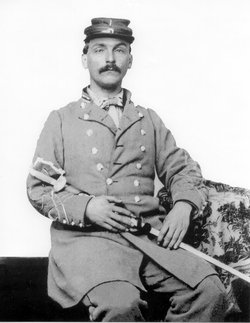
John and George Rose estimated that between five hundred and one thousand men were buried on their property. The number may well have been higher—the property saw twenty thousand men engage and create six thousand casualties.
-
The Legacy of Dr. John O’Neal in Gettysburg’s History

Dr. John O’Neal had many occasions to visit the John Rose family shortly after the battle—he treated their daughter for a nervous condition and he became one of the best sources about Confederate burials in the town and surrounding farms. History mostly remembers him for his work reuniting Southern families with the remains of their…
-
The Story of the George Rose Farm and Its Legacy

Scores of accounts about the Rose farm lead off with something like “at the farm of George Rose . . .” What most don’t realize is that George Rose was not only not living at the farm, he wouldn’t do so until at least 1868. So who was actually there, and how were they affected?…
-
Abraham Plank and the Cane Left Behind
Abraham Plank was a Pennsylvania farmer whose property lay on the southern end of Herr’s Ridge, near the Black Horse Tavern in Cumberland Township (Gettysburg area). He married Sarah Mickley (born 1802) and raised a family there. Census and genealogical records indicate their children included Josiah (b. 1827), Abraham (b.1832), John W. Plank (b.1840), and daughter Henrietta…
-
Francis Bream’s Legacy and the Black Horse Tavern

Francis Bream (1805–1882) was a prominent Adams County, Pennsylvania landowner, tavern-keeper, and public official, best known as the proprietor of the historic Black Horse Tavern (also known as Bream’s Tavern, and later occasionally called the “Dark Horse Tavern”). This tavern, a large stone inn west of Gettysburg, played a notable role during the Civil War’s…
-
Catherine Wills: Gettysburg’s Unsung Heroine
Catherine Jane Smyser, known affectionately as “Jennie” and in history as Catherine Wills, was born on August 12, 1834, in Pennsylvania. She was the eldest child of Daniel Martin Smyser and Catherine Barbara (Miller) Smyser. Catherine’s father was a prominent lawyer-turned-judge who had practiced in Gettysburg and later served on the Pennsylvania judiciary in Norristown.…
-
David McConaughy, David Wills, and the Feud that Gave Us the Gettysburg National Cemetery
In September 1863, David Wills and David McConaughy were featured side-by-side on the front page of the Adams County Sentinel. In the left column was David Wills magnanimously creating the National Cemetery, and in the right column was David McConaughy generously buying up battlefield land in order to create the Gettysburg National Battlefield Park. Unseen…
-
Culp’s Hill: Battle and Family Heritage at Gettysburg
Culp’s Hill and the Culp family remain inextricably intertwined with the story of Gettysburg. The Culp family’s presence in Gettysburg dates to the town’s very founding in the late 18th century. In 1787 – just one year after Gettysburg was laid out – a German immigrant named Christopher “Christophel” Kolb (later Americanized to Culp) purchased a 239-acre farm…
-
David Troxell: Gettysburg’s Historic Harness Maker
Today, David Troxell is known mostly for having a house that still stands and for the shell that still sticks out of it, but he was far more than his brief involvement in the battle. David was born on September 4, 1809, to John Troxell (1781–1855) and Catherine “Kitty” Ackerman Troxell (1786–1870). The Troxell family…
-
The Life and Legacy of Dr. John Edward Herbst
John Edward Herbst was born on February 24, 1828, into one of the long-established Pennsylvania German families of Gettysburg. He was the son of Rev. John Herbst Sr., a German Reformed minister and farmer, and Juliana Kurtz Herbst. Raised in a household that valued faith, education, and public service, John Edward was destined for a…