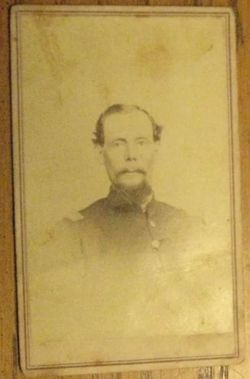
In his time, Henry Benner was one of the best-known Gettysburg residents—a burgess of the town (like a mayor), a war hero with a trove of wild experiences and stories, and a respected business- and family man. Today, the hill bearing his family name is barely visited, and few people know of Henry, his prominent family, or his heroics.
Family Background and Early Life
Henry Snyder Benner was born on October 1, 1830, in Adams County, Pennsylvania. He was the son of Christian Benner and Susannah “Susan” (Snyder) Benner. The Benner family lived on a farm east of Gettysburg (near the Hanover Road), a property that was later occupied by Confederate forces during the 1863 Battle of Gettysburg (an area known as “Benner’s Hill”). Henry had several siblings, including two sisters (Sara Ann Maria Benner, who married W. E. Biddle, and Juliann Sophia Benner, who married Union veteran William Walter), and two younger brothers: Simon C. Benner and Oliver Franklin Benner. His brother Simon (born 1841) served in the Union Army as well but died during the Civil War in 1864. His youngest brother Oliver Franklin Benner (1844–1927) later became known for his vivid recollections of the Battle of Gettysburg and the impact it had on their family farm.

In his youth, Henry learned the trade of granite cutting and also worked as a railroad agent. (As a stonecutter, he no doubt knew of and likely did business with Solomon Powers.) By the eve of the Civil War, he was an established tradesman in Adams County. When the war broke out in 1861, Henry—zealous in his patriotism—resolved to serve the Union cause, even though he was already 31 years old. This decision would set him on a remarkable journey through war and imprisonment.

Civil War Service
Henry S. Benner enlisted in the Union Army in late 1861, joining Company K of the 101st Pennsylvania Volunteer Infantry. He was commissioned as a First Lieutenant when the regiment was organized in December 1861. The 101st Pennsylvania saw action in the Peninsula Campaign in Virginia in 1862 (where it fought at the Battle of Fair Oaks/Seven Pines) and later served in North Carolina. Benner proved himself a capable officer and was promoted to Captain of Company K on February 5, 1863. He re-enlisted with the regiment when its veteran volunteers re-upped their service in early 1864, and he continued to lead Company K through that year.
In April 1864, Captain Benner and the 101st Pennsylvania were part of the Union garrison at Plymouth, North Carolina, a strategic town on the Roanoke River. From April 17–20, 1864, Plymouth was attacked and besieged by a Confederate force under Maj. Gen. Robert F. Hoke (with the ironclad ram CSS Albemarle supporting the assault). After days of intense fighting, the outnumbered Union defenders were overwhelmed. It was at Plymouth that Captain Henry S. Benner was captured along with most of the garrison on April 20, 1864. This marked the beginning of a harrowing period in Benner’s life as a prisoner of war.
Capture and Prisoner-of-War Ordeal
Major (then-Captain) Benner would spend the next 10 to 11 months in Confederate captivity. During this time he was moved through a series of Southern prisons under increasingly difficult conditions. His odyssey as a POW is summarized below:
- Initial Capture & Attempted Escape (April–May 1864): After the fall of Plymouth, Benner and other Union captives were taken south. During a transfer from the vicinity of Andersonville, Georgia, to Camp Oglethorpe in Macon, GA, Henry Benner and several fellow officers attempted to escape captivitycwppds.org. This early escape attempt was daring but ultimately unsuccessful – Benner was quickly recaptured by Confederate guards and remained in custody.
- Imprisoned at Macon, Georgia (May–July 1864): Benner was held at Camp Oglethorpe in Macon, one of the main Confederate prisons for Union officers, from about May 1, 1864 until July 27, 1864. Conditions at Macon were harsh; prisoners were initially kept in an open area (the fairgrounds) until a stockade was built. Despite privation, Benner endured the summer of 1864 in captivity here.
- Imprisoned at Savannah, Georgia (July–September 1864): As Union forces threatened Georgia, the Confederates transferred many prisoners. On July 27, 1864, Benner was moved to Savannah, GA, where he was confined for roughly seven weeks until September 17, 1864. This relocation was likely an effort by the Confederacy to disperse prisoners away from the front lines of Sherman’s advancing armies.
- Imprisoned at Charleston, South Carolina (Sept–Oct 1864): From September 17 to October 1, 1864, Major Benner was held in Charleston, SC. Notably, a group of Union officer POWs (sometimes called the “Immortal 600”) were kept in Charleston during this period and even placed under fire of their own side’s guns as human shields. Prisoners in Charleston were confined in the city jail yard or at the old Marine Hospital. Benner’s stay in Charleston was mercifully brief (about two weeks) before the ever-mobile population of prisoners was moved yet again.
- Imprisoned at Columbia, South Carolina (Oct 1864–Feb 1865): Benner next found himself in Columbia, SC, from early October 1864 until February 14, 1865. There, officers were held in an open prison camp known as Camp Sorghum, and later in buildings (such as Camp Asylum) as winter set in. Columbia was notorious for its lack of shelter and food; many prisoners attempted escape from Camp Sorghum. (Indeed, several of Benner’s comrades from the 101st PA, such as Capt. George W. Bowers and others, successfully escaped from Columbia in the fall of 1864.) Benner himself endured about four and a half months in Columbia’s prisons.
- Final Transfer and Escape in North Carolina (Feb 1865): In mid-February 1865, with General Sherman’s Union army marching north from Georgia into the Carolinas, Confederate authorities evacuated many prisoners from Columbia. Captain Benner was moved to Charlotte, North Carolina in February 1865cwppds.org. While in Charlotte, he made a bold escape attempt – his second – and this time succeeded in slipping away from his captors for a short while. However, yet again his bid for freedom was foiled by bad luck or vigilant pursuers: Benner was recaptured after this escape from Charlotte. The Confederates then sent him to a prison at Salisbury, NC, a facility that by 1865 was overcrowded and rife with disease.
- Parole and Release (March 1865): Henry S. Benner’s long captivity finally ended in late February 1865 as the Confederacy began to crumble. He was paroled at Salisbury and passed through the Union lines at Northeast Ferry on the Cape Fear River (near Wilmington), North Carolina, on March 1, 1865. In total, he had spent roughly 11 months as a prisoner of war. Like many POWs, he emerged in poor health – suffering from the effects of malnutrition and exposure – but he had survived. (Several of his fellow 101st Pennsylvania officers did not survive imprisonment, and many enlisted men from Plymouth perished in the infamous Andersonville prison.)
Despite the “galling imprisonment in Confederate prisons,” Henry Benner’s military service did not go unrecognized. He continued to be listed on the army rolls during his captivity, and after he rejoined the Union forces in the spring of 1865, he received an honorary promotion. On June 1, 1865, Benner was breveted Major for his faithful service and sacrifice. (He had been officially commissioned a Major of his regiment in the closing weeks of the war, though he was never formally mustered at that rank due to the war’s end.) When the 101st Pennsylvania was finally mustered out on June 25, 1865, Henry S. Benner left the army as a captain by rank, but he proudly bore the title of Major for the rest of his days in honor of his wartime promotion.
Post-War Life and Legacy
Returning home to Gettysburg after the Civil War, Henry S. Benner resumed civilian life and quickly became an important figure in the community. In 1867 he was hired as the teller of the Gettysburg National Bank, a position of trust which he held until September 9, 1873. His reliability and integrity in that role were a reflection of the same qualities he had shown in the army, and as a result, he was promoted to assessor.

Benner also entered public service and local politics. He served for several years as the Burgess of Gettysburg, essentially the mayor of the boroughia800802.us.archive.org. In this capacity, and as a prominent member of the Democratic Party, he became “one of the best known men of Adams County.” Major Benner was Postmaster of Gettysburg for many years as well, lending his leadership to the federal post office in town. His involvement in civic affairs made him a well-respected public servant. (The Congressional Record notes his appointment as postmaster in the 1880s, underscoring his standing in political circles.)
Throughout his post-war life, Henry Benner remained active in veterans’ events and was undoubtedly a member of the Grand Army of the Republic (GAR), the Union veterans’ organization, given his status as a former officer and ex-POW. He carried the scars of war in the form of chronic rheumatism – a condition he developed due to the hardships of prison life – but he rarely complained about his ailments. In fact, acquaintances noted that “no murmur ever escaped his lips” about his sufferings; he faced life with a stoic and positive demeanor.

Major Henry Snyder Benner died on December 22, 1904 at the age of 74. According to his obituary, news of his failing health had circulated about a week prior, and his passing, when it came, was deeply felt in the community. He was buried in Evergreen Cemetery in Gettysburg, the same cemetery where his parents (and many Civil War casualties from the battle) were laid to rest. In remembering him, the local press described Major Benner as “probably one of the best known men of Adams County,” highlighting how he had been a gallant soldier and later a pillar of the community.
Henry S. Benner’s life story is a compelling saga of dedication and endurance: from the quiet farmlands of Gettysburg, to the battlefields of the Civil War, through the ordeal of Confederate prisons (where he even dared a bold escape), and back home to a life of public service. His legacy is preserved not only in the historical records of his military unit, but also in the collective memory of Gettysburg, where a battle hill bears his family name and where his own contributions as a civic leader left a lasting imprint.
Leave a Reply to Civil War Stories: Juliann Benner's Courage on the Homefront – The Gettysburg Network of 1863Cancel reply