Tag: slavery
-
James Samuel Noble: 15-year-old Sergeant Buried on the John Edward Plank Farm
When the war broke out, James Samuel Noble somehow convinced his family he was old enough—at age 13, he joined his older brother, Dallas, in enlisting in May 1861. Of course, no one could see that he would end up on the John Edward Plank farm just two years later. The Nobles were farmers who…
-
James Godman, Black Teamster, Alleged Confederate Casualty
One of the curiosities of the records of Confederate dead is the case of James Godman, also listed at various times as Chadman or Codman. He turns up in the Camp Letterman surgical history, one of the best and primary sources on Confederate deaths and burials at Gettysburg. In that record, he is J.H. Chadman,…
-
Benjamin Franklin Carter, Henry Johnson, and the Stories We Tell
Benjamin Franklin Carter and Henry Johnson. It’s a story that seems to illustrate the American divide while harmonizing the country. A Union officer is killed in a battle; a Confederate officer so admires his opponent’s bravery that he buries the officer in his own coat. Later, that same Confederate officer is mortally wounded at the…
-
James McAllister’s Mill and the Underground Railroad
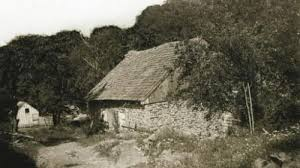
What is now known as McAllister’s Mill was originally developed in 1790 by James Gettys and an unidentified partner. James McAllister would not purchase the mill that became a symbol of freedom until 1822. From his early days, James and his family were ardent abolitionists and deeply involved in the anti-slavery cause, which would later…
-
Jim Green and the Killing of Samuel Mars
Jim Green is believed to be the brother or uncle of Catherine Payne, and he came to the Gettysburg area when Mary Maddox first manumitted the enslaved people she had inherited from her husband. Jim was not captured or caught up in the legal drama following Catherine’s kidnapping, but from then on, he carried a…
-
The Legal Cases of Catherine Payne
For Catherine Payne and her family, three different legal cases emerged. In Virginia, after being taken to the county prison and with the support of Mary Maddox and local Quakers, Catherine Payne filed a suit for damages against Samuel Maddox for kidnapping and unlawful imprisonment. Likewise, Samuel Maddox sought to have the manumission of the…
-
Catherine Payne and Her Family’s Escape from Samuel Maddox
In the predawn hours of July 24, 1845, a group of slave catchers composed of six white men and a black man burst into the room where Catherine “Kitty” Payne and her three children were sleeping. At gunpoint, the men violently loaded Catherine and children into a wagon and made for the Mason-Dixon line about…
-
The Fugitive Slave Act of 1793 and the 1845 Kidnapping of Catherine Payne
In the predawn hours of July 24, 1845, and under the guise of protections guaranteed by the Fugitive Slave Act of 1793, a group of slave catchers composed of six white men and a black man burst into the room where Catherine Payne and her three children were sleeping. At gunpoint, the men violently loaded…
-
1840s: Mary Maddox, a Whole Estate, and the Fugitive Slave Act of 1793
In the 1830s and 1840s, tensions in Gettysburg ran high because of the Fugitive Slave Act of 1793. In 1837, the death in Virginia of a moderately wealthy planter, Samuel Maddox, would touch off a constitutional crisis that involved kidnapping, imprisonments in both Virginia and Pennsylvania, and three different complex court cases. While simple on…
-
Chapter 0: Freedom from Slavery in Prison
What Samuel Maddox really wanted was to sell his uncle’s former slaves. And for that reason, Kitty, Eliza Jane, Mary, and Arthur James went to prison. After the nighttime kidnapping, the speedy wagon journey got them over the Mason Dixon line, and from there, a day or two later, they stopped at the plantation of…