Category: Confederate Soldiers
-
Abraham Plank and the Cane Left Behind
Abraham Plank was a Pennsylvania farmer whose property lay on the southern end of Herr’s Ridge, near the Black Horse Tavern in Cumberland Township (Gettysburg area). He married Sarah Mickley (born 1802) and raised a family there. Census and genealogical records indicate their children included Josiah (b. 1827), Abraham (b.1832), John W. Plank (b.1840), and daughter Henrietta…
-
Cemetery Hill: The Birthplace of Evergreen Cemetery

Culp’s Hill and Cemetery Hill are forever joined in history because of the great battle fought on their grounds—but they also share a common family history going back generations. Prior to becoming hallowed ground, Cemetery Hill was known locally as Raffensperger’s Hill, a prominent rise just south of Gettysburg. In the early 19th century it…
-
The Life of Private Samuel N. Cox: A Confederate Story
Private Samuel N. Cox was no ordinary Confederate private. Nearly everyone around him was single, but Private Cox was well into his second marriage. The few married men usually had young families—no kids or one kid, maybe two or three at most. Samuel Cox had three boys and two girls by his first wife and…
-
The Price Twins: Brothers in the Civil War
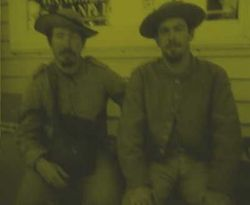
The Price twins, James and John, were just nine years old in January 1852 when their father, a modestly well-off plantation owner named William C. Price, attended the Alabama Democratic Convention. He came from deeply patriotic stock. His grandfather Anjer Price was a sergeant in the 8th Virginia in the Revolution. His father, William Vines…
-
The Tragic Legacy of Augustus L. Short’s Family
Corporal Augustus L. Short came from a house divided—his father, Augustus D. Short, was from Bristol County, Massachusetts, while his mother, Jane G. Smith, was from Clarke County, Georgia. The older Augustus and Jane married in 1842 in Clarke County. The oldest boy in their family, James, may have come from a previous marriage: he…
-
The Life and Death of Sergeant Major David Huff
Sergeant Major David Huff of the 17th Georgia Infantry was a member of field and staff—people who worked with the commanding officers to convey messages, organize supplies, monitor positions, disburse pay, and tend to other duties necessary to move troops. It was not a safe position but not the most dangerous either. On July 2…
-
Captain Mark Kerns and Benjamin Franklin Carter at Second Manassas
You may now be familiar with Lt. Col. Benjamin Franklin Carter and his former body servant Henry Johnson. Of course, Captain Mark Kerns of the US First Artillery figures prominently in the story without having been given the same historical attention. So who was this man that Lt. Col. Carter respected so much as to…
-
The Tragic Fate of John J. Walthall in the Civil War
Where men, guns, horses, and gunpowder are we are bound to see instances of tragic luck. John J. Walthall appears to be just such an instance. How rare was his end? In 1837 a little-read article by S.D. Poisson articulated a distribution pattern for highly unlikely but still occasional events. This application was later used…
-
Impact of Civil War on Enslaved Lives: Albert Butts and Richard Jordan
In 1895, Macon, Georgia, announced the passing of one of its most eminent citizens—Captain Albert Butts who had commanded Company B, The Macon Volunteers in the 2nd Georgia Battalion. He appeared at company reunions over the next thirty years. He was lauded for his faithful service in the local Episcopal church, and he was hailed…
-
Jesse Ricks Pittman: A Victim of the Odds Buried on the John Edward Plank Farm
Another of the men buried on the John Edward Plank farm, Jesse Ricks Pittman’s story is particularly tragic. As men began to enlist in 1861 and as photography improved, photographers reminded the public to have their men sit for photos “before it’s too late,” as one heavy ad intoned. The photo here is a pre-war…