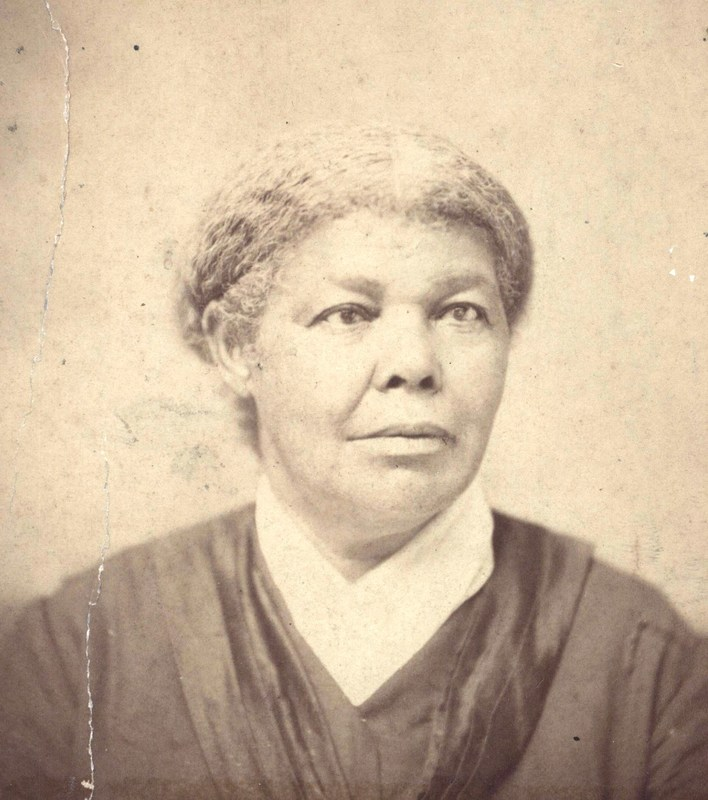
The Mag Palm kidnapping attempt is perhaps the most told event of her life. It has some striking similarities to the kidnapping of Catherine Payne in the motivations that triggered it. In the story, Mag is blindsided by three white men who attempt to load her into a wagon to be sold South into slavery (much as Catherine and her children were captured at night and loaded in a wagon). Mag fights them off, possibly biting off the finger of one of the kidnappers. A townsman hears the ruckus and helps break up the attempt. What most don’t realize is that the men were local, they were prosecuted . . . and they all continued to live around Mag in Gettysburg for much of the rest of their lives. So who were the men and why did they try to kidnap Mag?

The Economic Conditions of 1858
In 1858, the country was just emerging from the Panic of 1857, one of the worst financial crises of the 19th century.
The panic began in August 1857 when the Ohio Life Insurance & Trust Company collapsed, leading to widespread bank failures, factory closures, and unemployment. Hardest hit were the industrial and agricultural regions of the North, including Pennsylvania. Grain prices collapsed, railroads went bankrupt, and thousands of workers were thrown out of jobs. In Adams County, for example, the price of wheat from $2.19/bushel in 1855 to $1 by late 1857. Corn and oats similarly fell.
By 1858, the country was still in economic depression: unemployment was high, and ordinary laborers, farmers, and mechanics were desperate for income. Carriage-making, brickmaking, and skilled trades (the kinds of work associated with men like those involved in the crime) suffered from decreased orders.
Local newspapers from Adams County in 1857–1858 complained about shortages of cash, “hard times,” and men traveling to find work.
The Economics of Kidnapping
Under the Fugitive Slave Act of 1850, anyone who captured or aided in the capture of an alleged fugitive could be rewarded. Slaveholders sometimes offered cash bounties for the return of specific people.
In border regions like Adams County (just 10 miles north of the Mason–Dixon line), gangs of “slave catchers” and kidnappers targeted free Black residents, because they could be sold into slavery for $500–$1,000 – an enormous sum when a laborer might only make $200–$300 per year.
In times of economic hardship, the temptation was even stronger. Newspapers in south-central PA during the depression years reported repeated incidents of kidnappers seizing free Blacks and rushing them south before communities could react.
The men behind the kidnapping were a carriage maker, a farmer, and a young laborer in whose home Mag Palm worked.

The Mastermind
Ferdinand Buckingham was one of the men Palm identified as an abductor. Contemporary evidence suggests he would eventually be a resident of York County, PA, but he was born in Gettysburg and still living there in 1858. On the 1860 census, Buckingham’s occupation was listed as a “carriage maker,” fitting the fact that the kidnappers arrived with a carriage to haul Palm away. Genealogical records suggest Ferdinand was born in 1836, making him around 22 at the time of the kidnapping.
Buckingham appears to have been the muscle or organizer of the operation. Rumors in Gettysburg held that one kidnapper (possibly Buckingham) lost a thumb to Palm’s teeth during the struggle. After the foiled abduction, Buckingham and the conspirators were indicted, and Mag ultimately won her case. However, the sentences or recompense are not found in available records and could not have been heavy.
For example, by the early 1860s, however, Ferdinand’s life took a new turn.
When the Civil War broke out, Ferdinand Buckingham enlisted in the Union Army – an ironic twist given his prior crime. Records show a man by that name serving as a Private (and later First Sergeant) in Company A, 107th Pennsylvania Volunteer Infantry, a regiment raised in 1862. It seems Buckingham, once a perpetrator of slave-kidnapping, ended up fighting for the Union cause. He fought in several engagements with the 107th PA, including The Battle of Gettysburg. Surviving the war, Buckingham returned to York County. Little is published about his later years, but he appears in post-war veterans’ lists. One local history source indicates that in 1896 the York Rifle Company honored veterans including a “Ferdinand Buckingham,” suggesting he lived into late middle age. He died in 1905. His obituary in the Gettysburg Compiler indicated he fought with the 87th Pennsylvania, though military records indicate otherwise.

Ferdinand Buckingham’s story is a complex one – a man who in 1858 attempted to steal a free woman’s liberty, but later donned Union blue, perhaps seeking redemption or simply following the tides of history. Regardless, his name in Gettysburg is chiefly remembered for the outrage of Mag Palm’s attempted kidnapping, one of the “boldest cases of kidnapping” local papers had ever reported.
Philip Snyder – The Local Farmer with a Dark Chapter
Philip Snyder was another of Palm’s assailants. Snyder was a white Gettysburg-area farmer, owner of a farm on the Emmitsburg Road just south of town. In fact, the Philip Snyder farm, a two-story log house built in 1831, still stands today on the Gettysburg Battlefield (near West Confederate Avenue). By 1858, Snyder was a middle-aged family man of some standing in the community – which made his involvement in this crime especially alarming to neighbors. It’s believed that Snyder may have been acquainted with Southern slave traders or bounty hunters (Gettysburg had its share of Southern sympathizers and kidnappers for hire in those days). He likely conspired with Buckingham to carry out Palm’s abduction, perhaps luring her with the promise of wages owed (Palm waited to be paid for the laundry work, delaying her until after twilight).
After Palm’s dramatic escape, Snyder was swiftly implicated. She named “Phillip Snyder” in her sworn statement, and a warrant was issued for his arrest. Snyder stood trial and, along with the others, was convicted of the attempted kidnapping in 1858. Whatever the punishment, by the time of the Gettysburg Campaign in 1863, however, Philip Snyder was back home. Indeed, during the Battle of Gettysburg, Confederate troops marched right across the Snyder farm on July 2, 1863 (Hood’s Division formed up there to attack Devil’s Den and Little Round Top). This indicates Snyder had resumed his life in Gettysburg by then, despite the notoriety of the earlier incident.
After the war, the Snyder farm remained in his family for decades – the property wasn’t sold to the park commission until around 1900. This suggests Philip Snyder lived out his later years in Adams County relatively quietly. Local lore does not celebrate him, of course; he is remembered, when noted at all, as part of the gang that tried to kidnap Mag Palm. The restored Snyder farmhouse stands as an ironic reminder on the battlefield: one of Gettysburg’s scenic farmsteads that harbored a man who once preyed upon his Black neighbors. Snyder died in 1886 and was buried in Evergreen Cemetery; by 1893 his farm was in others’ hands. His descendants kept a low profile. In the end, Philip Snyder’s legacy is largely that of a cautionary tale – a local citizen drawn into the immoral enterprise of slave-catching, who faced legal punishment and opprobrium for his actions.
Joseph C. Tuckey – The Inside Man
Joseph Tuckey was the third person involved – notably, Palm had been working at the Tuckey household the day of the attack. Joseph C. Tuckey was a young white man (only about 21–22 years old in 1858) from a local Gettysburg family. In fact, the laundry client may have been Joseph’s mother or wife, but Joseph himself appears to have participated in setting the trap for Mag Palm. By some accounts, waiting for Joseph Tuckey to pay her for the day’s work is what delayed Palm until after dark, when the would-be kidnappers struck. Palm explicitly accused “Tuckey” as one of her abductors in her legal complaint. This implies that Joseph Tuckey was present during the assault, helping tie her hands or otherwise assisting Buckingham and Snyder. It’s possible Tuckey had contacts with slave traders or hoped for a reward by delivering Palm to them.
Tuckey was arrested and stood trial alongside the others. Despite his youth, the court did not spare him – he was found guilty of the attempted kidnapping and would have received whatever judgment was handed down to the others in the conspiracy. However, Joseph Tuckey’s story did not end there. Records suggest that Tuckey was married (his wife was Sarah Meyers) and had children – in fact, they had a son in 1857, just before the incident.
The shame of the kidnapping case may have prompted Tuckey to relocate for a time—in the Civil War, he enlisted in Franklin County in the Pennsylvania 165th Infantry. Joseph C. Tuckey lived long past the Civil War. Genealogical sources indicate he survived into the early 20th century – reportedly dying in 1916 at about 80 years old. He spent his later years in Pennsylvania, living first in Harrisburg before moving to York, far removed from his youthful crime. Unlike Palm, who became a local legend, Tuckey’s name faded into obscurity – except when the tale of Mag Palm is retold. In those narratives, he is invariably the treacherous insider who betrayed a woman who trusted him enough to work in his home. It’s a stain that never lifted. While details of Tuckey’s post-trial life are scant in public records, the fact that he lived for decades afterwards suggests he reintegrated into society. There is no evidence he ever faced any other criminal charges. He likely tried to put the 1858 episode behind him, but in Gettysburg’s collective memory, Joseph Tuckey is remembered (if at all) for the ignominious role he played in the attempted kidnapping of Mag Palm.
Aftermath and Legacy
The Mag Palm case of 1858 had a lasting impact on Gettysburg’s Black and white communities. For African Americans, it was a stark reminder that even in a free state like Pennsylvania, vigilance was essential – slave catchers and kidnappers lurked, and freedom papers offered little protection if one was caught alone. Palm’s narrow escape and courtroom victory were celebrated as a rare triumph of justice. The Adams County judiciary’s willingness to punish the kidnappers (at a time when many such cases elsewhere resulted in acquittals or light sentences) may have had a deterrent effect locally. Indeed, historians note that Palm’s case “momentarily grabbed the attention” of Adams County newspapers and residents, underscoring the “continual danger along the border” for free Blacks.
For the three perpetrators, the consequences were life-altering. They endured public disgrace, jail time, and in Buckingham’s case, perhaps a resolve to rehabilitate his reputation by serving in the Union Army. Gettysburg’s 1860s-era newspapers later recounted Palm’s heroism. The men who attacked her, however, disappeared from local praise. Snyder’s farm became part of the Gettysburg battlefield story not because of him, but because of the battle fought on his land. Tuckey lived in quiet anonymity. Buckingham’s pre-war crime was overshadowed by his wartime service to the Union.
Margaret “Mag” Palm’s name, meanwhile, lives on. She is featured in exhibitions (such as the Gettysburg Beyond the Battle Museum) as a conductor on the Underground Railroad and a woman who literally fought for her freedom. In modern Gettysburg, tours and plaques ensure her story is told alongside more famous Civil War tales. Palm’s defiance in 1858, her tied hands raised in that old photograph, and her insistence on seeking justice in court all mark her as an unsung hero of the anti-slavery struggle.
Leave a Reply