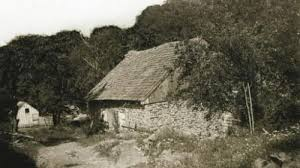
What is now known as McAllister’s Mill was originally developed in 1790 by James Gettys and an unidentified partner. James McAllister would not purchase the mill that became a symbol of freedom until 1822. From his early days, James and his family were ardent abolitionists and deeply involved in the anti-slavery cause, which would later bring both death and privation to the McAllister sons.
McAllister’s Mill is located on the Baltimore Pike. The American Battlefield Trust recently purchased the property where a miniature golf course had operated in recent years. The mill no longer stands, though tours of the grounds were initiated in 2011 in pre-Covid years.
James McAllister was open and public in his pursuit of abolition. On July 4, 1836, he and many others held the founding meeting of the Adams County Anti-Slavery Society. The articles they adopted are given as follows:

The meeting and the adoption were hardly without controversy. A rival newspaper produced a letter from an “observer” that decried one of the early meeting’s practices.

Over the years, McAllister’s Mill was one of the stopping places on the Underground Railroad, and estimates (which can be shaky, given the UGR’s secrecy) suggest that as many as one thousand enslaved people made their way to freedom through Gettysburg. The mill area was in the woods, and Rock Creek and its surrounding environs made great hiding places for people fleeing slavery.

The site also saw fighting during the battle. The first casualty in the area, George Washington Sandoe, was a Union cavalry scout who wandered into Confederate lines a week before the battle and was killed. McAllister, ever the fearless Unionist and abolitionist, allegedly scolded the Confederates, collected the body, and arranged for its transport home.
McAllister’s children participated with him in the enterprise, met many formerly enslaved people, and heard their horror stories. “Is it any wonder that I grew up to young manhood hating slavery with a mortal hatred?” asked Theodore McAllister in an article he wrote years later for the Miller’s Review. The War came to Gettysburg and did at least $1200 of damage to the McAllister property. Seventy-seven-year-old James housed his family and friends in his home during the battle, but his sons were out fighting in other regions. His namesake, James III, was killed at Vicksburg, while Theodore was captured and made a prisoner at the infamous Andersonville Prison. An account of Theodore’s experience follows.

The elder Jams McAllister passed away in the 1870s a few years after the War. Union veterans returned often to the area, and in one case, some repaid an old debt—they had stolen a dozen loaves of bread from the McAllisters and they returned fifty years later to pay one of the McAllister daughters for what they had taken.
Leave a Reply